Earning the Ceremony
228 km. “We should be able to cover that in about six or seven hours,” we were told. We had a good lunch of the usual local fare: roasted goat with sweet potato leaves and fermented cassava, washed down with a cold Primus to bless the road ahead. It took a little over an hour into the journey to realize just how badly we had underestimated what lay ahead.
The road between Kananga and Mweka, in Kasai-Occidental, now renamed Kasai, like so many roads in DR Congo, is not covered by public transport. Only a few delivery trucks dare to venture along the treacherous route with their sacred cargo, because beer, apparently, must be delivered to even the remotest corners of the country. Everything else, including people, is carried by light motorcycles hurrying along like ants before a summer rainstorm. They carry bags of cassava, plastic chairs, chickens, mattresses, children, sometimes all at once.
My mission was to visit Mweka, the capital of the Kuba Kingdom, one of the most prominent and perhaps best-documented traditional kingdoms of the Congo. I had learned so much about the Bakuba, as the people are called collectively, and when the opportunity came, I decided to jump. My art-dealer friend, Albert, who also doubled as my fixer for the trip, was from the community and the son of one of the most respected carvers of the Kuba king himself, which gave Albert the kind of access that no guidebook can provide and no official permit can quite replace.
The three days we had planned required little in the way of supplies, so with one small bag each and my camera gear, we set out on a single motorcycle. That meant a driver, Albert, and me on a 150cc moped. For the promised mere six hours, the discomfort seemed outweighed by the adventure. This was, of course, before the terrain began negotiating directly with our bones.
The road was unforgiving. Recent rain had soaked deep into the sand, turning the surface into soft mud. Physics prevailed. The narrow tires of the moped, under our combined weight, had no chance, and we kept sinking deep into the sand until riding was no longer an option.
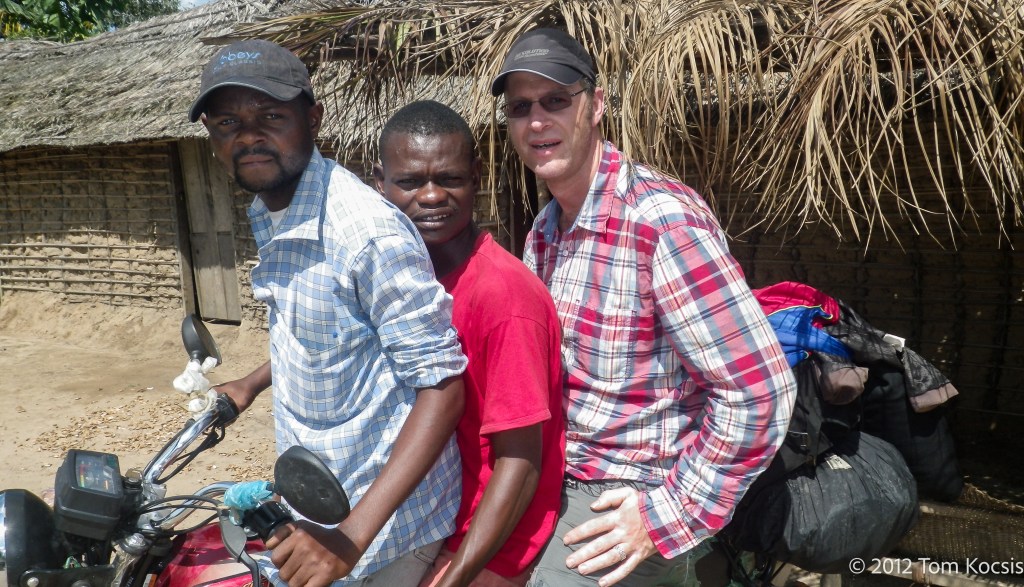
We fell, pushed, pulled, and eventually ended up walking for hours. When we tried riding again, the spokes of the wheel gave out, rendering the moped useless. As night fell, we continued on, sleeping only for a couple of hours on top of an abandoned roadside vegetable stand.
Twenty-six hours.That is how long it took.
We arrived hungry, dirty, and exhausted. I could not even gather enough energy to be properly annoyed when dealing with the corruption of the local police chief, who had clearly not seen a foreigner in a long time and seemed determined to make the moment count.
That same evening, we began the formalities with the village chiefs, which usually meant moving from hut to hut, drinking beer and palm wine, and speaking in careful secrecy about what exactly would be revealed. There was the keeper of the mask, one of the elders with special status, who needed to be convinced that the spirits were aligned and would not be upset by the presence of an “unauthorized” outsider. I am still not sure whether it was the beer, the goodwill of the gods, Albert’s quiet credibility, or some combination of all three, but permission was granted. The ceremony was approved.
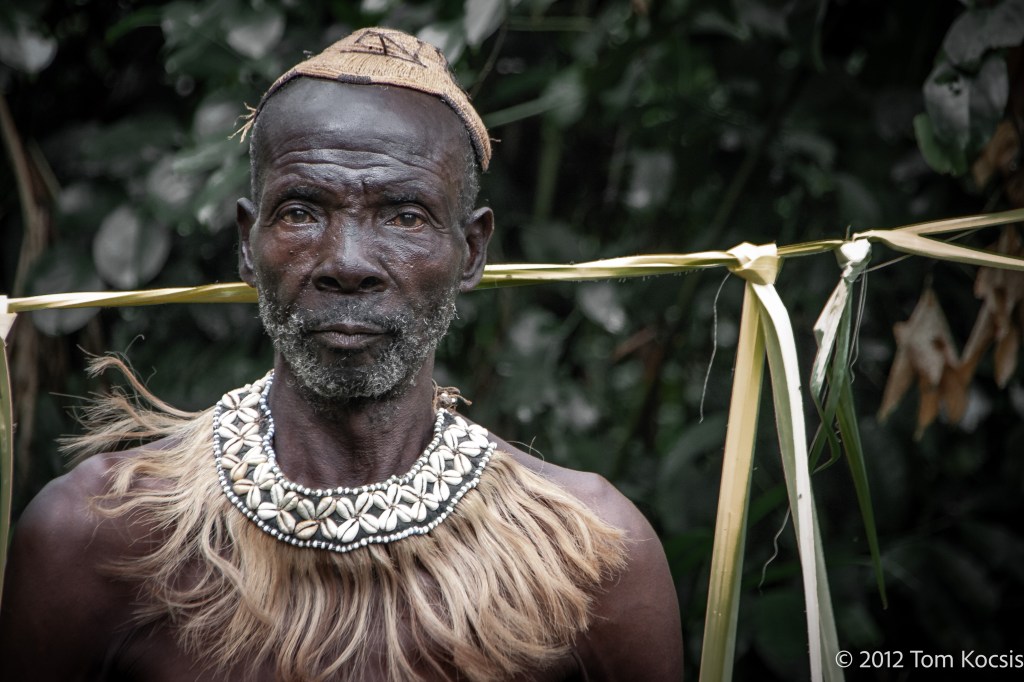
The next day, preparations started early. The staging area was selected deep in the bush and cordoned off with freshly cut palm leaves, while the ceremonial objects, costumes, and adornments were collected from their respective guardians. Once laid out, there was nothing random about the order. I felt privileged simply to be there and to listen to the stories and meanings of each piece, knot, and bead as the costume slowly came together. The respect for tradition and the seriousness of the event were in the air.
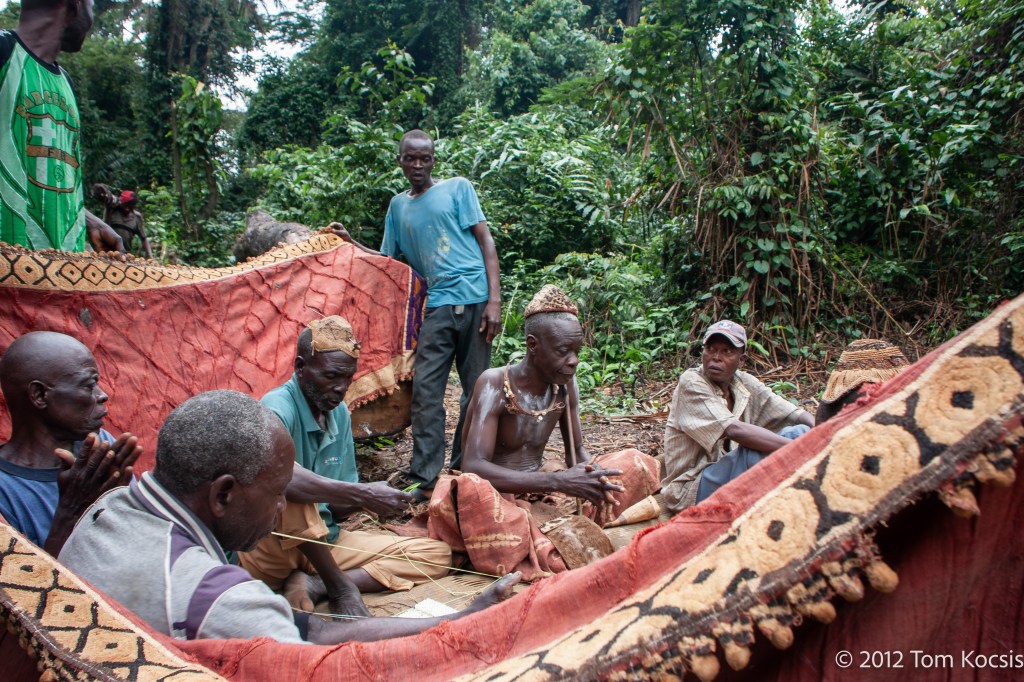
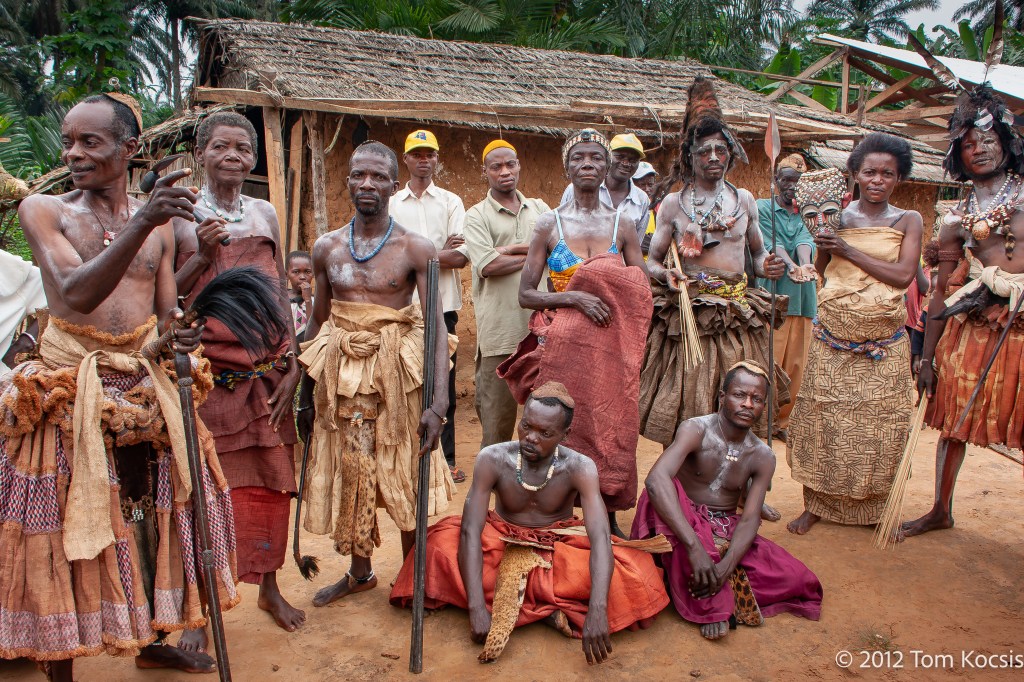
The preparation area was guarded, and only the most respected elders participated, each with a clearly assigned role and a leader preparing to wear the precious outfit. There were weavers, rope knotters, and costume tailors, but no one was interchangeable. Every hand knew its duty.
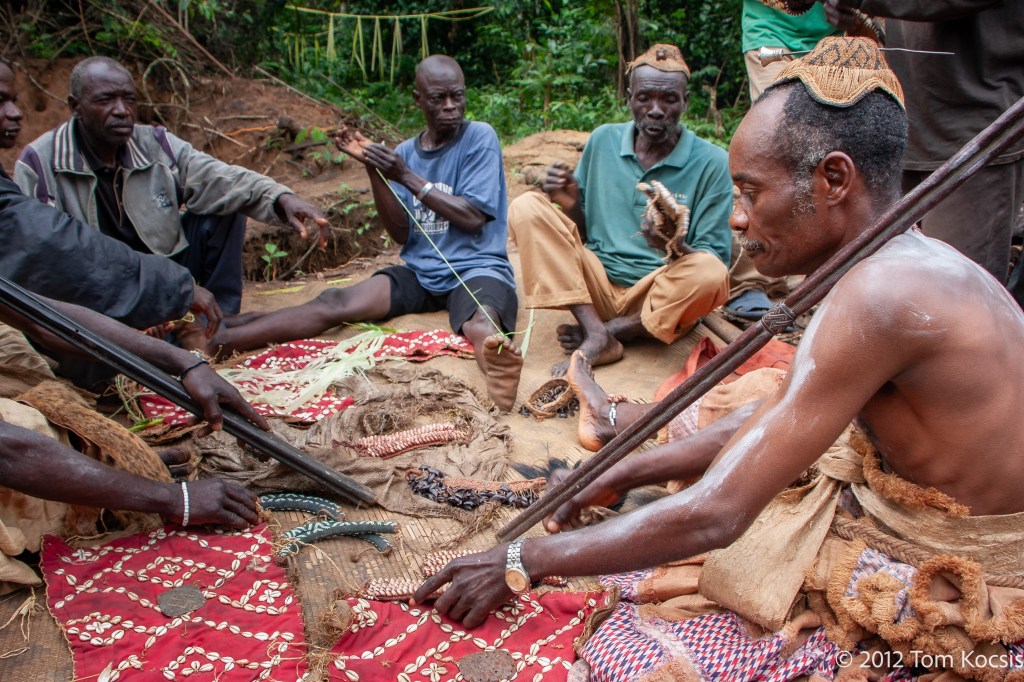
I observed quietly, documenting the process and listening to Albert’s explanations. He was not a member of the elders. His age simply did not qualify him. But his father, no longer alive, had been a prominent carver in the kingdom, and Albert had grown up under the wings of these men. He had access. He had their acceptance. Chronological maturity, however, was a non-negotiable qualification in this group.
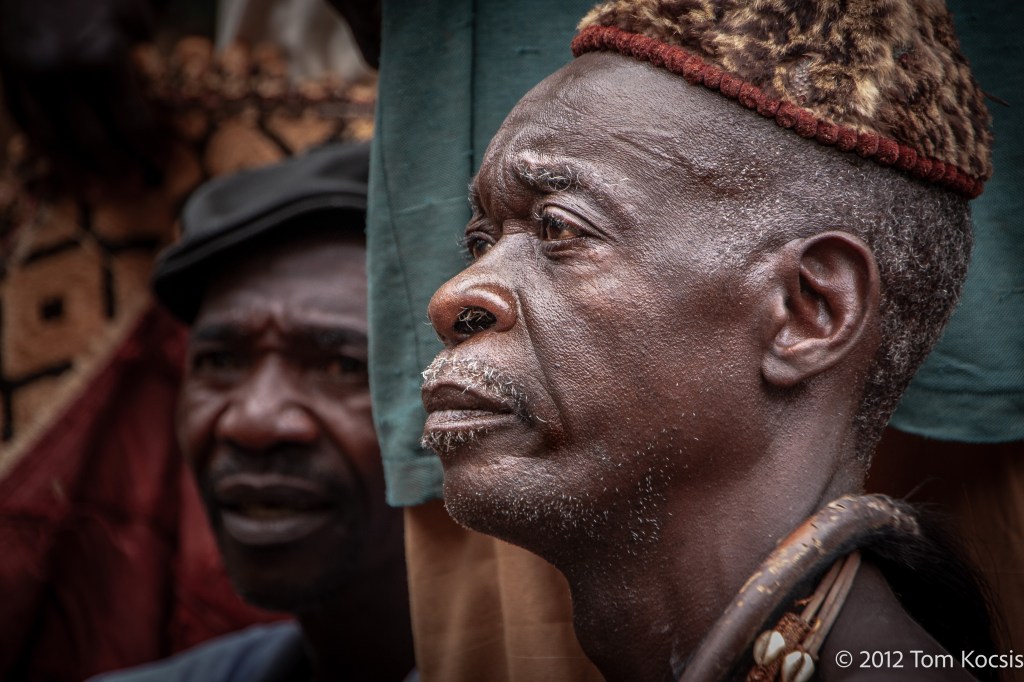
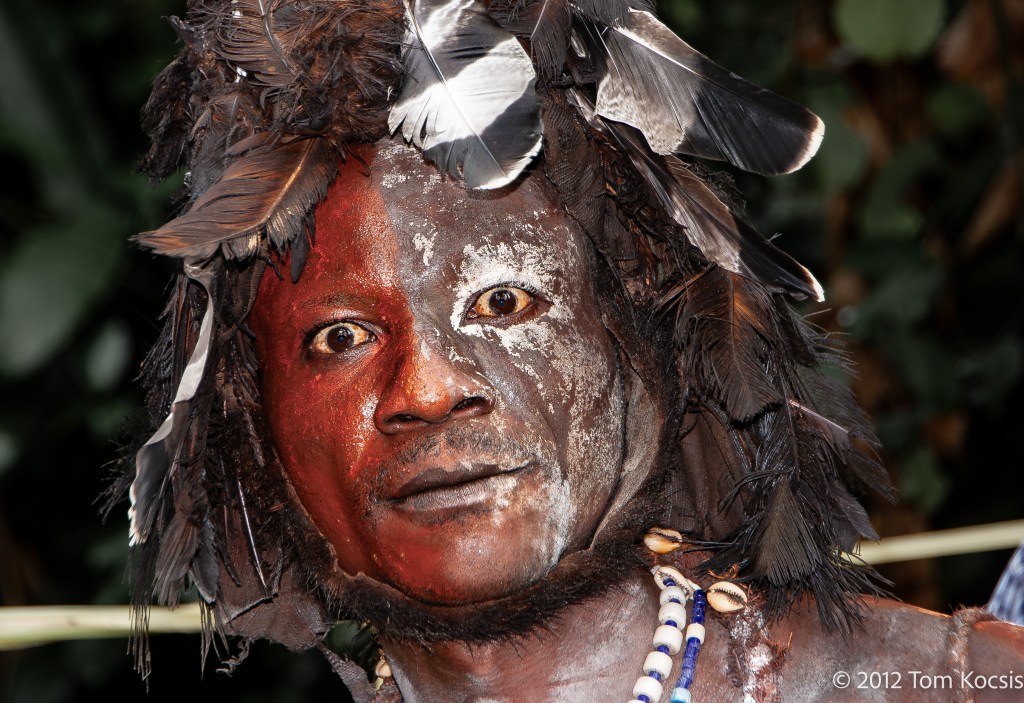
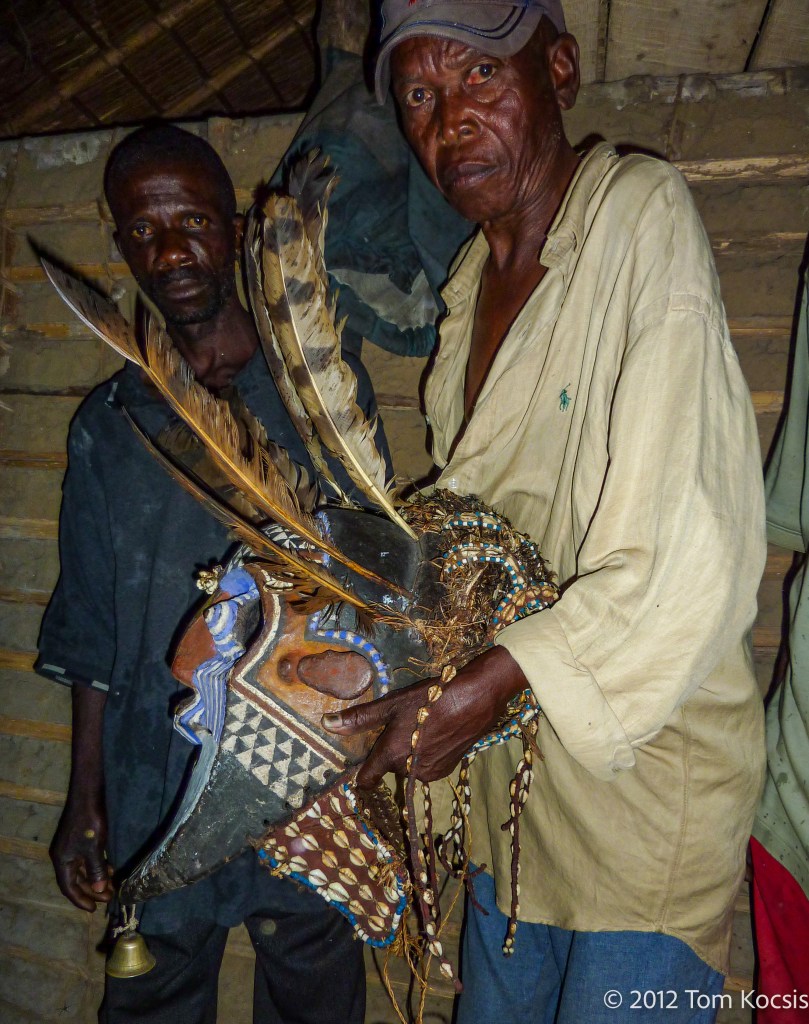
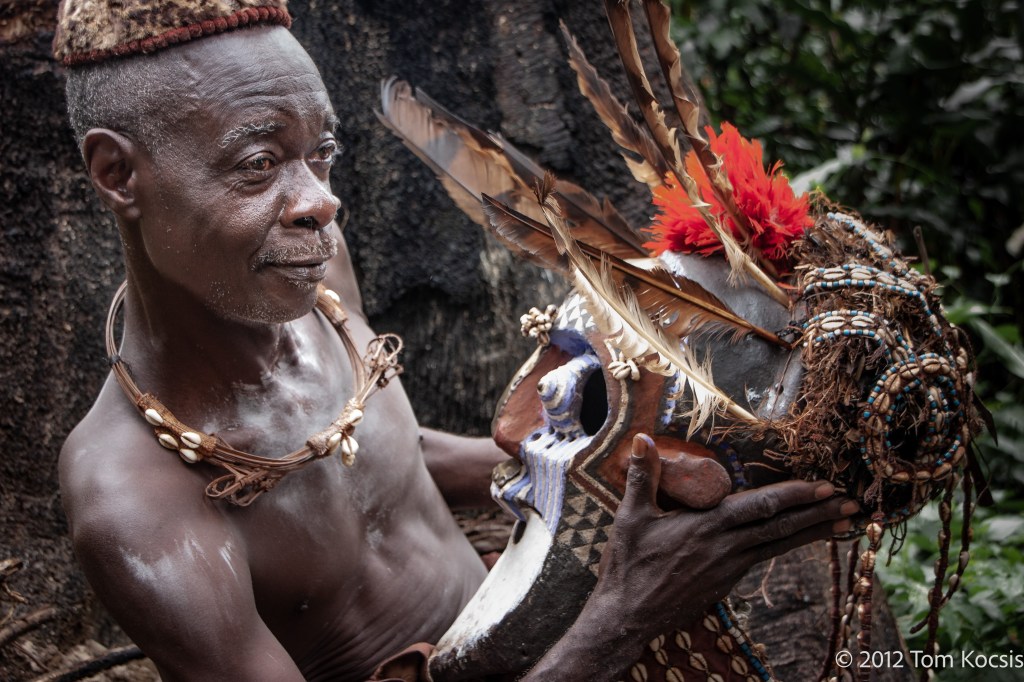
The excitement in the village continued to build as the day progressed. The warrior dancers, charged with elevating the atmosphere, were getting high on spirits, both literally and figuratively. Dressing the dancer was a meticulous task and took hours, but by mid-afternoon, the preparations reached their climax: the mask could finally be placed on the dancer. The mask itself was extraordinary. The object, decorated with brightly colored kaolin-based paint and adorned with feathers, raffia, goat hair, and beads, was about the size of a full-face motorcycle helmet. It was worn on top of the head, allowing the wearer to see and, more importantly, breathe under the mask, as the performance was physically demanding.
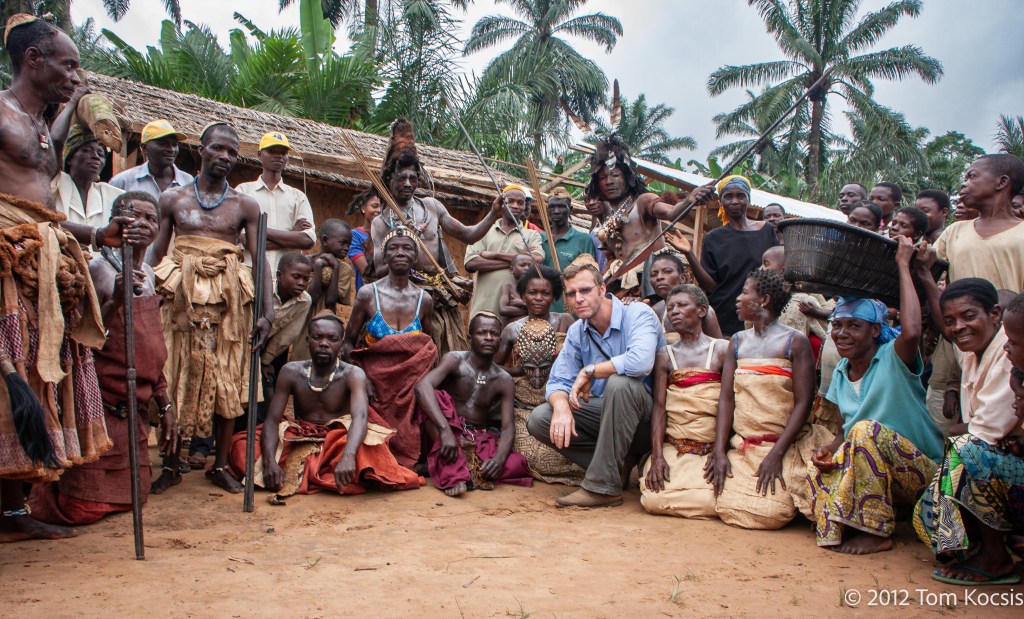
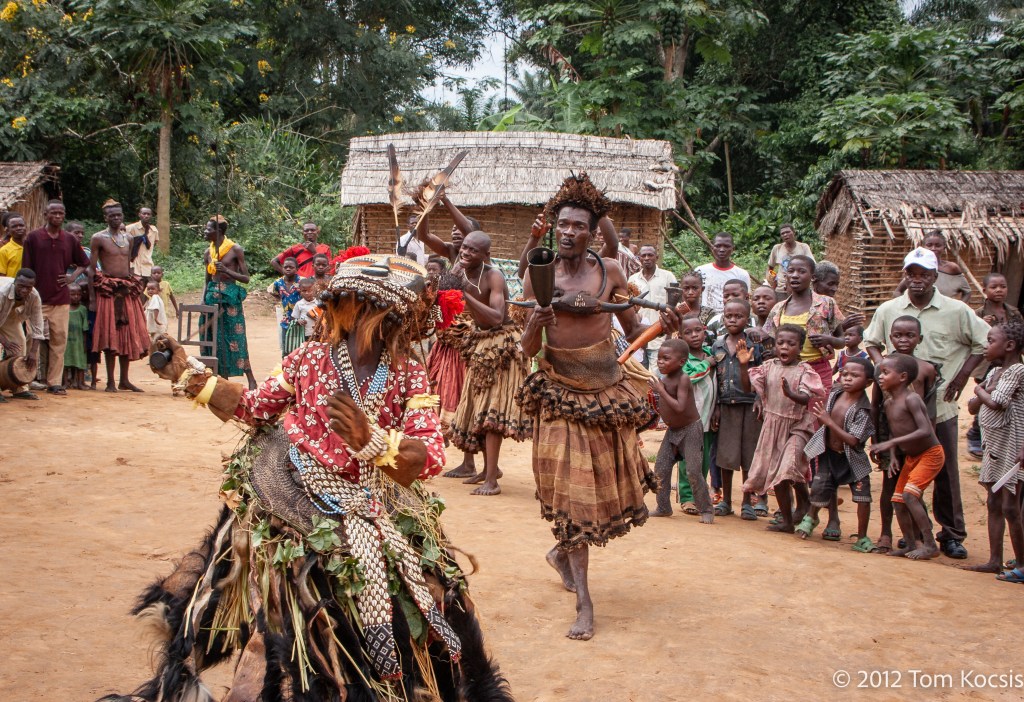
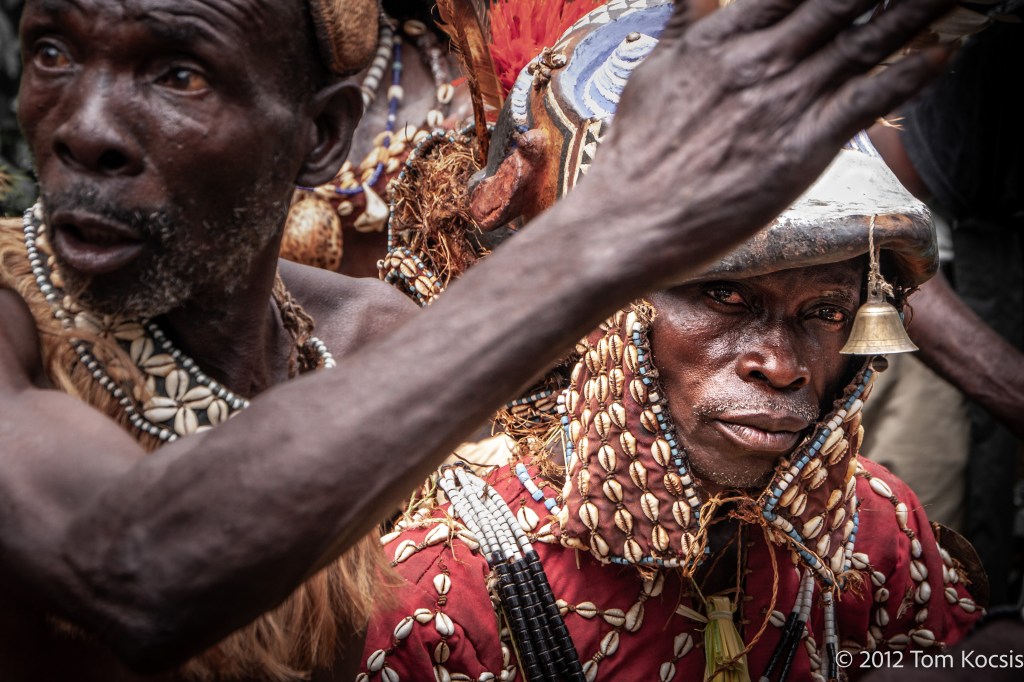
The dancer and his entourage emerged slowly from the bushes. It was a carefully choreographed act of invitation and teasing, drawing the mask bearer into the village. A pulsating exchange between the people and the spirits the mask represented. The celebration, however, quickly turned into total euphoria. By then, goats had been slaughtered, and beer and palm wine were flowing.
Small children cried in terror at the painted faces of the warriors, women danced with whatever they could grab, and people ran up and down the village, chasing or being chased by the procession. Joy, pride, and tradition overtook everyone as the community came together squeezing out the feeling of poverty, pain, and suffering that had no place in the village…Not that day!
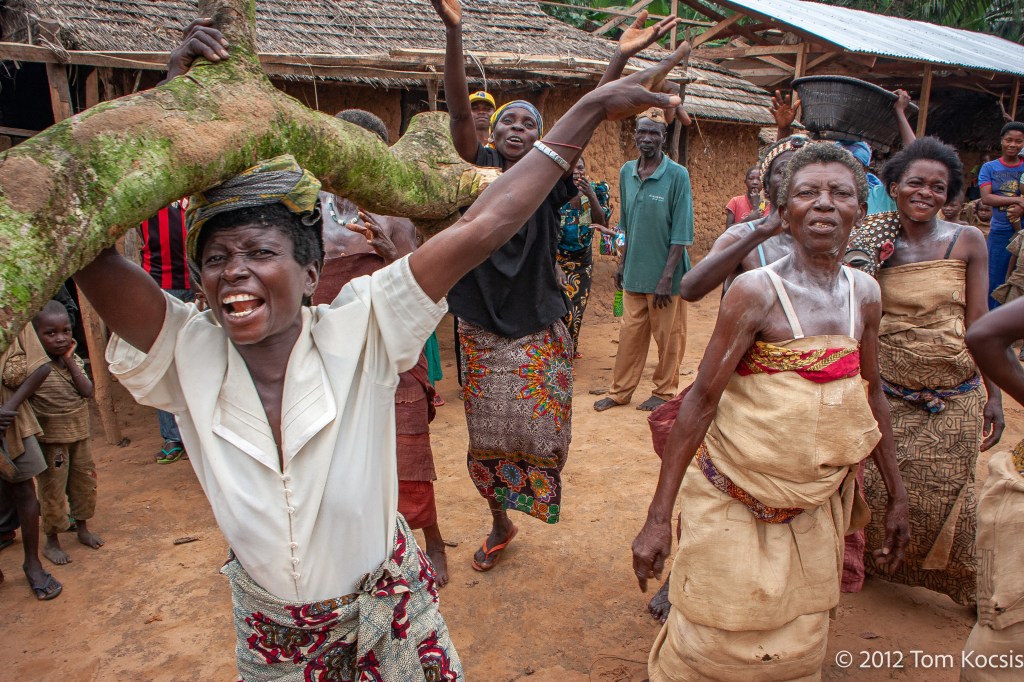
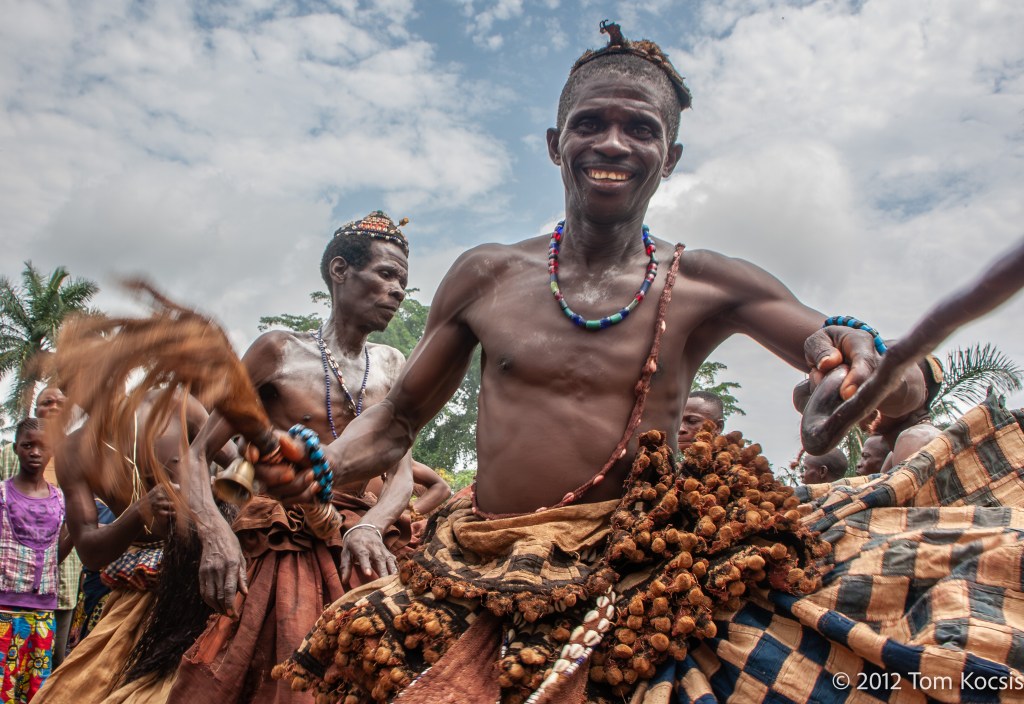
As darkness took over from the blistering sun, the village quieted down. An occasional laugh or drunken outburst slipped from beneath the orange flicker of candles and oil lamps. The goat meat was gone and the beer had run out, but the day would be remembered. These days are like fresh logs on a dying fire. The days and months in between are busy with survival, just enough to keep the embers simmering.
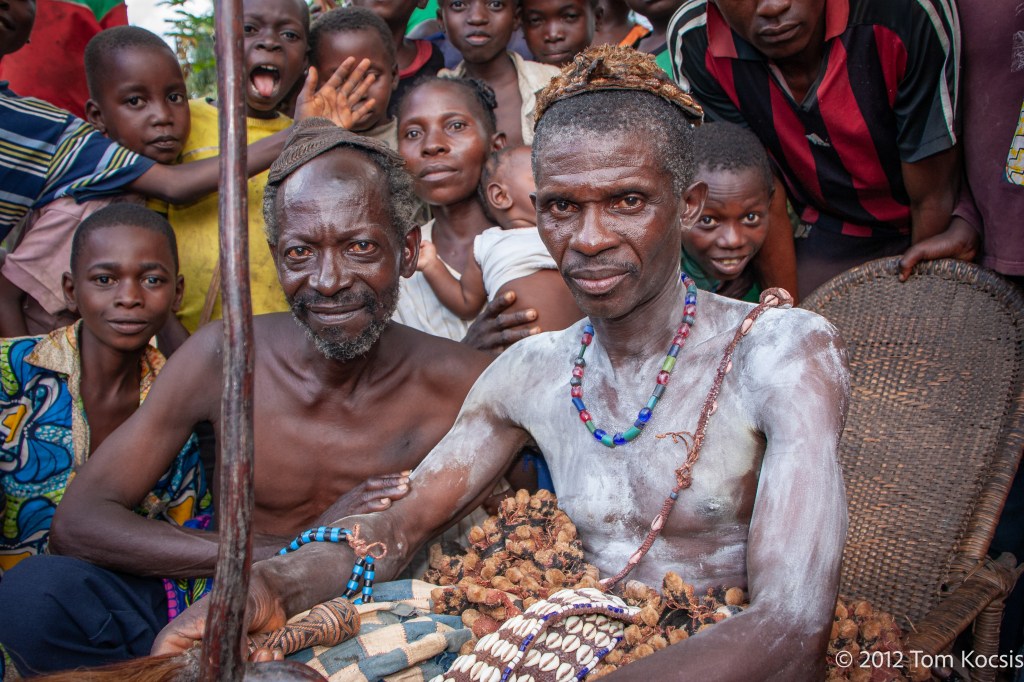
The next day, we visited the neighboring village where the Tsua chief lived. The Batsua are often associated with the ancestors of the Bakuba. He and his drunken first lieutenant were very proud to share their side of history, passed down through generations.
Then the time arrived to face the return trip. Still 228 km. We had become wiser, or at least less foolish, which on that road felt like progress. We decided to rent two motorcycles with drivers, hoping the distributed weight would defy physics and allow us to remain on top of the packed sandy surface. It worked. Until it didn’t. Rain had fallen overnight, and in some parts of the road the mud had turned into knee-deep ponds. About 50 km from our destination, one moped gave out, so we were back to sharing, but we were making much faster progress. The 26 hours became only 16, which felt like a joyride compared to the first leg of the journey. This is how standards collapse: enough mud, and suddenly 16 hours on a moped feels like luxury.
Besides the unforgettable memories and images captured, I had another, although less lasting, reminder of the journey. Before we left, the village shared whatever little they could to comfort us on the return trip. I received a bag of peeled peanuts, which I placed in my backpack. With everything, including myself, tied to the bike, the bag somehow ended up rubbing against my lower spine for a good part of the journey. Like peeling paint against sandpaper, my skin had no chance of staying attached to my body. The bloody blisters, however, were a small price to pay for an experience that will live with me forever.
I feel fortunate. I know few people have an interest in this level of “adventure,” and even fewer have the opportunity to get there. The deepest corners of the Congo remain very difficult to access. And perhaps that is part of why the memory has stayed so sharp: the road did not simply take me somewhere. It made sure I earned the arrival.